
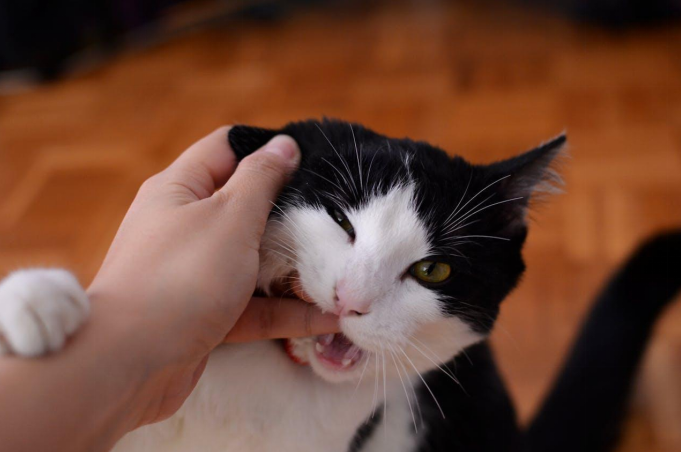
Introduction
Have you ever wished you could decode your cat's meow — you know, the persistent one or the slow blink — to see what she's trying to tell you? As cat owner, we would love to have a glimpse into their minds and know exactly what they think of us.
Cats may not use human language, but they have a highly developed and sophisticated system of communication that has evolved over thousands of years. Cats can convey a wide range of messages from 'I'm comfortable and relaxed' to 'Get lost or I'll scratch!' via body language, vocalizations, scent marking, and physical contact.
In this article, we will help you understand cat language so that you can develop a strong relationship with your feline friend. We'll cover tail positions, ear movements, meows, and more, and discuss what they all mean.
The Nuances of Cat Body Language
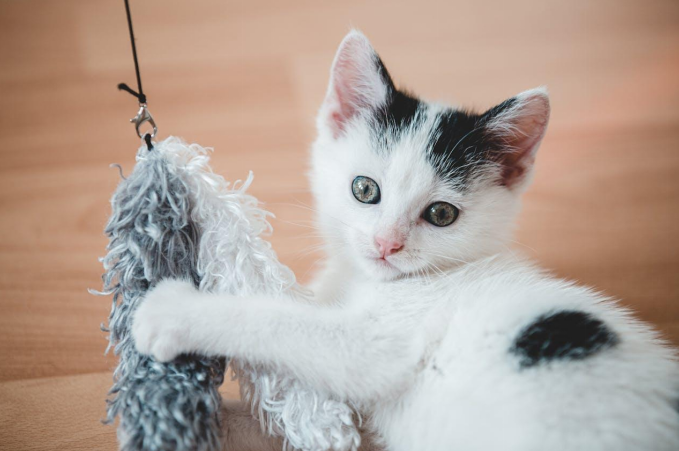
Cats mostly communicate with cat body language about their needs, intents, and feelings. Keeping an eye on your cat's moves and facial expressions gives you an idea regarding their state of mind. Now, here are some common body language cues laid out for you:
Tail Talk
Your cat's tail can be a very reliable indicator of their mood and intentions. Some of these key tail signals are:
● Upright tail: An erect tail is a sign of happiness, a relaxed state, and a friendly hello. It could mean ness or interest, too.
● Twitching tail: It is an exciting, disturbing, irritating, or overstimulated sign shown by your cat. It could mean that your cat is annoyed over something.
● Puffed-up tail: An upright furry tail signals fear, aggression, or defensiveness. When a cat gets an upset puffy tail, give it space.
● Low or tucked tail: The tail trending down toward the ground, or tucked between the hind legs, generally indicates fear, submission, sadness, or a desire to be invisible.
● Swaying tail: A playful cat will slowly swing its tail side to side to lure you in before attacking. This is a kind of motion taking a proper aim, like hunting for food. WOpet offers reliable and automatic feeders for your cats so they can get their treats on time.
Ear Expressions
Those fuzzy ears do more than just pick up sound — they actually convey some vital information:
● Ears forward: Ears that are held up and facing forward show interest, attention, ness, and curiosity. Full sensory engagement is signaled by pointy ears straight ahead focused on whatever has managed to catch the cat's attention.
● Ears swiveling: The cat rotates its ears to locate the source of sounds. Swiveling ears mean that your cat is listening very closely to something in the environment.
● Ears flattened: When ears pull back and flatten against the head, it is usually a sign of fear, pain, aggression, or defensiveness. Back away from an irritated cat with ears pinned down.
● Ears twitching: Subtle ear twitching is often a sign of mild annoyance, anxiety, or overstimulation from too much input. You need to walk on eggshells and try not to inundate the cat.
Eye Signals
The cats also tell us much with their alluring eyes:
● Slow blinks: If a cat closes and opens its eyes slowly, it is a gesture of love, trust, and relaxation. Responding to your cat with slow blinking, on the other hand, expresses affection and safety. That is also why people tend to refer to slow blinks as cat kisses.
● Wide, dilated pupils: In the dark, the pupils of the cat are dilated to catch in more light, yet big black pupils can likewise result when psychological changes take place in concern, overstimulation, or an aggressive state.
● Narrowed pupils: Narrowed pupils mean aggression or intense concentration, particularly on prey. They are also seen in bright light, and they help to control the amount of light that enters the eye.
● Direct stare: a fixed stare is an incredibly rude thing among cats (unless it involves two cats who are bonded in which case it is mutual). Do not engage in staring contests with cats you have never met before.
● Avoiding eye contact: A cat who turns its head away, or closes its eyes to avoid looking directly at the other is signaling submission and deference and an intent to avoid conflict.
Posture and Movement
Further emotional and physical states are revealed by posture and movement:
● Stretch: An extended stretch with the front paws stretched out in front and the butt in the air indicates relaxation and satisfaction. This is typically a form of greeting for cats towards familiar humans.
● Rubbing against legs: To mark their territory, cats rub up against you to leave their familiar scent on you — a sign of affection from your feline friend.
● Kneading: Going back and forth with the front paws — usually on something soft — harkens back to cats nursing from mom. When an adult cat is feeling safe, comfortable, and content it will often knead.
● Back arching: A clear sign of fear and preparation to attack, this position includes an arching back with hair standing on end, and most often hissing. Give them a wide berth.
● Low to the ground: When cats enter a situation where they are uncertain (as in, either they will want to run away or towards something, they recreate themselves as small, hoovering low to the ground as they prepare to freeze or flee. And it's also a frequent hunting stance.
● Hiding: Fleeing in a confined space indicates a lack of safety and that something needs to be protected in order for it to feel secure.
Therefore, observe your cat's body language carefully! As unnoticeable changes can do a lot.
Decoding Cat Vocalizations
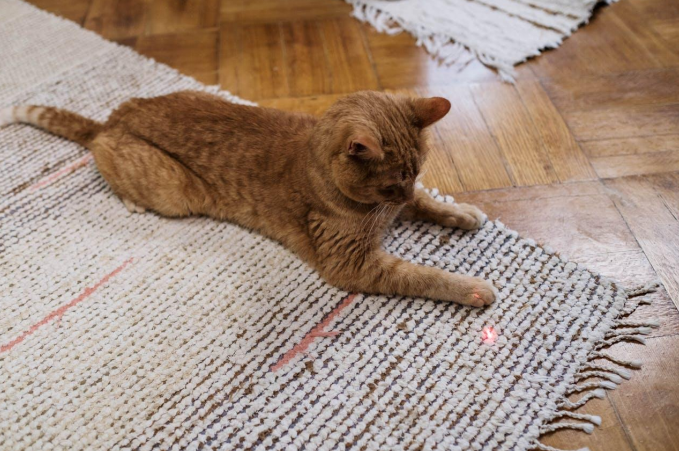
In addition to body language, cats are endowed with a large vocal scale for expressing their needs, mood, and responses. Now, here are the explanations for what some typical cat sounds actually mean:
The Mighty Meow
Even the classic cat meow transmits multiple messages depending on subtle variations in tone, volume, urgency, and inflection. A short, polite meow is a quick, soft sound that is often used as a polite way to say hello, or to simply grab an owner's attention—kind of like saying, 'Hey!'
But an extended, prolonged meow is often a sign your cat needs something right away. This constant cry of aggravation, till the cat gets what he or she desires— most often food or some amusement.
Chattering meow: a sound comprised of a rapid sequence of staccato sounds, indicating excitement, impatience, frustration, and/or mixed emotions. It can be interpreted as: 'Give me — or I want it now.'
The plaintive yowling meow — that loud cry, similar to a human wail, that cats make when they are sore, frightened, or frustrated that something they want or need is beyond their reach. A cat that plops itself down next to you and scratches with its claws and meows like this can often seem cute or funny but it's actually sad and should be petted to calm it.
Like all vocalizations, an angry meow is often laden with body language and consists of low, throbbing sounds. It says only one thing—stay away and get off immediately.
The Soothing Purr
The classic cat purr is a soft, vibrating rumble in the throat. However, did you also know that purring has multiple communicative functions?
The most common type is called pleasure purring and takes place when a feline is relaxed, content, feeling safe, and/or happy. Pleasure purring can be elicited by positive experiences such as petting, feeding, or grooming.
Cats only begin to purr when they are upset, ill, hurt, dying, or about to give birth to babies only purrs to when they are upset, ill, hurt, dying, or preparing to birth babies. Purring releases endorphins, which help to relax and comfort cats in stressful situations.
Soliciting purring is something cats quickly learn: if they purr, the human will often keep petting or continue serving food. Thus cats purr to get more rewards by manipulation — such smart kitties! Even though purring is generally a good sign, it can sometimes be interpreted differently depending on the context in which it occurs.
The Assertive Hiss and Growl
The hiss and the growl — two dark sounds of the cat’s communication. They spray it out through their teeth, making a fierce, hissing noise.
Hissing can be a sign of fear, defensiveness, or warning to strike. Growling occurs when sound is produced deep in the throat, and it is a rumbling that is an active warning device that a cat is preparing to attack.
Growling, similar to hissing, means that the cat wants further annoyance stopped or to be left alone. Know how to interpret these obvious signals of a: 'I'm mad.' Therefore, when faced with hissing and growling, it is better to back off and leave the grumpy cat with plenty of personal space, than to get clawed or bitten! They'll chill out eventually.
Conclusion
The nature of cat language often seems cryptic but cats use a beautifully delicate and profane mixture of body posturing, vocalizations, scents and touch to convey need, intention, limits, and feeling.
By paying attention to the context and meaning of various signaling behaviors that cats use on an almost daily basis, attentive cat guardians can increase a sense of mutual understanding and trust with these wonderful, yet enigmatic pets.
Is your cat hungry and constantly bugging you? Visit WOpet to get a range of automatic feeders!
Resource: Cat Language